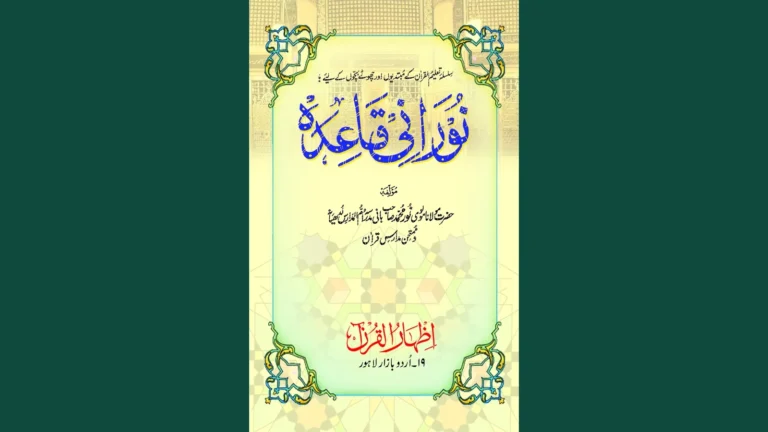

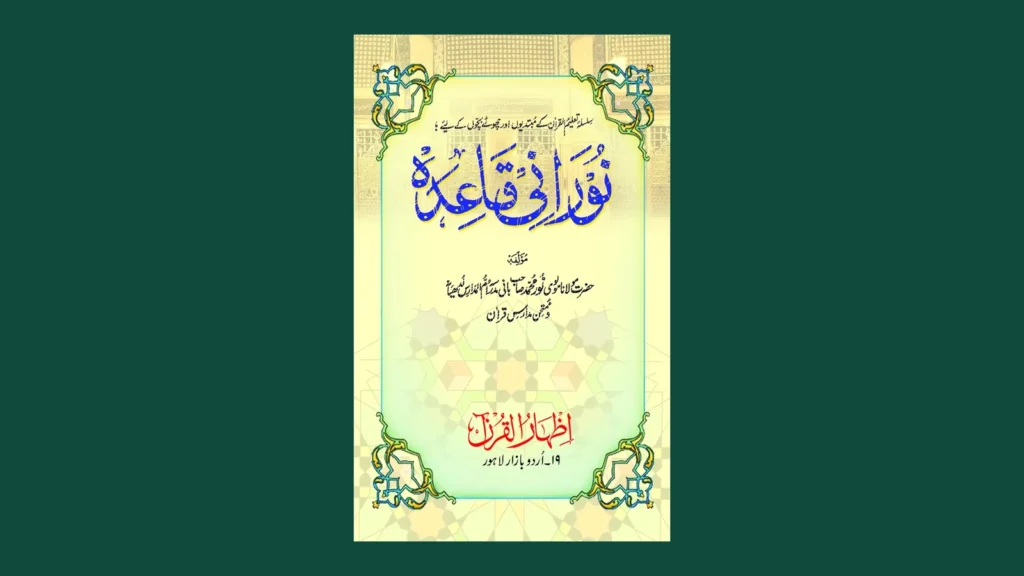
The Noorani Qaida is a step-by-step primer that teaches you to read the Quran in Arabic, starting from the individual letters. It moves through letter shapes, vowel marks and joining rules in a careful order, so that by the last lesson you can read words directly from the Mushaf. This guide explains what is in each stage, how long it usually takes, and how to get the most from it, whether you are teaching a child or learning yourself.
What is the Noorani Qaida?
The Noorani Qaida (القاعدة النورانية, “the Noorani primer”) is a beginner’s workbook for Quran reading, compiled by Sheikh Noor Muhammad Haqqani and used for generations across South Asia, the UK, North America and beyond. Many editions exist, including Indo-Pak and Saudi (Madani) prints. They differ slightly in layout, but the teaching order is the same.
It is not a book of meaning or grammar. Its one job is to teach you to read the script correctly: every letter from its proper place, every vowel the right length. That narrow focus is exactly why it works.
Why the Qaida works better than shortcuts
- One new idea at a time. Each lesson adds a single concept, then drills it until it is automatic.
- Real Arabic, not transliteration. You never rely on English letters, which cannot show Arabic sounds accurately.
- It ends in the Quran. The final lessons use Quranic words, so the move to the Mushaf feels natural.
- Pronunciation is built in. With a good teacher, each letter is learned from its correct point of articulation (makhraj) from day one.
The Noorani Qaida, stage by stage
Editions number their lessons differently, but almost all follow this sequence:
| Stage | What you learn | Example |
|---|---|---|
| 1. Single letters | The 28 letters on their own and their exact sounds | ا ب ت ث |
| 2. Joined letters | How letters change shape at the start, middle and end of a word | بـ ـبـ ـب |
| 3. Disjointed letters | The letters that open some surahs, read by name | الٓمٓ |
| 4. Short vowels | Fatha, kasra and damma | بَ بِ بُ |
| 5. Tanween | Double vowel marks that add an “n” sound | بًا بٍ بٌ |
| 6. Standing vowels | The small vertical marks that lengthen a vowel | هٰذَا |
| 7. Long vowels (madd) | Alif, waw and ya that stretch a sound to two counts | بَا بِي بُو |
| 8. Soft letters (leen) | Waw and ya with sukun after a fatha | خَوْف بَيْت |
| 9. Sukun | A letter with no vowel, joined to the one before | مِنْ |
| 10. Shaddah | Doubled letters, alone and with other marks | رَبِّ |
| 11. Quranic words and stopping | Putting it all together and stopping correctly at the end of a verse | الْحَمْدُ لِلّٰهِ |
You can practise the vowel marks and letter rules with our free Quran reading flashcards.
How long does the Noorani Qaida take?
With three short lessons a week and a few minutes of daily practice, many learners finish the Qaida in about three to six months. Some move faster, some slower. What matters is that each stage is solid before the next one starts.
| Learner | Typical pace | What helps most |
|---|---|---|
| Young child (4 to 6) | Slower; short lessons, lots of repetition | A parent beside them and the same teacher every week |
| Older child (7 to 12) | Steady | Daily practice of the last page studied |
| Adult beginner | Often fastest through the early stages | Patience with pronunciation, not just recognition |
How to get the most out of each lesson
- Revise before you start. Re-read the last page aloud. If it is not smooth yet, stay there; moving on early only creates gaps.
- Say the sound, not the letter’s name. From stage 4 onwards, read بَ as “ba”, not “ba fatha”, as soon as you can.
- Point as you read. Following each letter with a finger keeps your eyes on the line and stops skipping.
- Keep it short and daily. Ten minutes every day beats an hour at the weekend.
- Read to someone who can hear you. Most Qaida mistakes are sounds you cannot hear yourself making. Correcting them early saves months later.
Common Noorani Qaida mistakes
- Rushing the first stage. If similar letters such as ح and ه, or س and ص, sound the same, the foundation is not ready.
- Stretching short vowels or cutting long ones short. Length changes meaning in Arabic.
- Memorizing pages instead of reading them. Children especially can recite a familiar page from memory. Test them by pointing to letters out of order.
- Skipping revision once a stage feels easy.
Teaching the Qaida to your child
If you are teaching at home, the same rules apply, with extra patience. Keep sessions short, praise effort rather than speed, and stop while your child is still enjoying it. If you are not confident in your own pronunciation, a teacher can lay the foundation while you supervise practice at home. Our guide on helping your child practise at home has a simple routine to follow.
After the Qaida: what comes next?
Once you can read Quranic words smoothly, you move to the Mushaf itself, starting with short surahs. From there, most learners add Tajweed, then choose between memorization and understanding the meaning. Our Quran Reading for Beginners course follows exactly this path, from the first letter to fluent reading.
Frequently asked questions
Is the Noorani Qaida only for children?
No. It is used by children and adults alike. Adults usually move faster through the early stages and appreciate its clear, logical order.
Which edition of the Noorani Qaida should I buy?
Choose an edition that matches the Mushaf you will read from afterwards: an Indo-Pak print if you will use a 13 or 15 line South Asian Mushaf, and a Saudi (Madani) print if you will use the Madani Mushaf. Your teacher can advise.
Can I learn the Noorani Qaida online?
Yes. In a live one-on-one lesson the page is shared on screen, you read aloud, and your teacher corrects each sound as you go. It works well for children and adults.
Do I need to finish the Qaida before reading the Quran?
Yes, or at least reach the final stages. Starting the Mushaf with gaps in the basics usually means relearning them later.